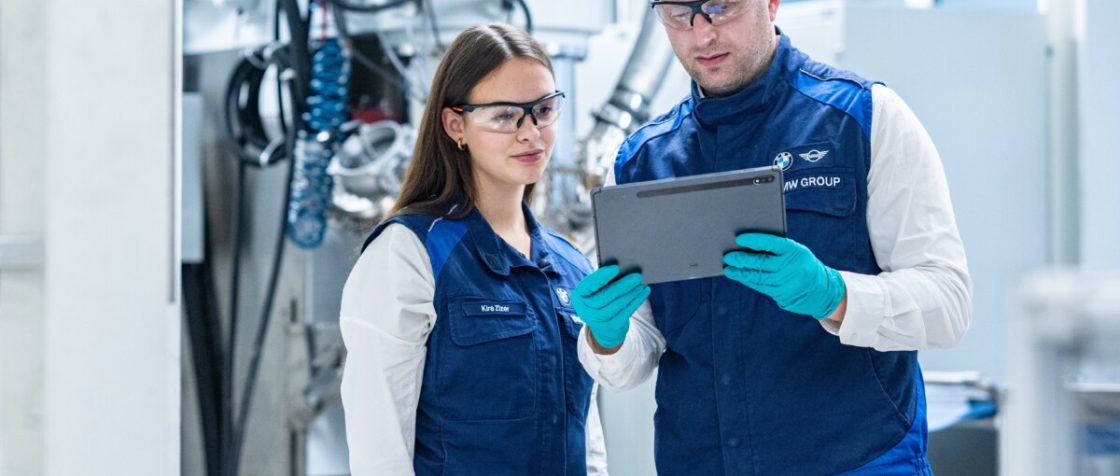
MUNICH & ZAGREB – The BMW Group has announced a significant leap in battery production efficiency through its “Insight” research project, a pioneering collaboration with the University of Zagreb’s Regional Centre of Excellence for Robotic Technology (CRTA). By integrating advanced Artificial Intelligence (AI) into the manufacturing process, the project has successfully demonstrated the ability to reduce testing time and raw material consumption by more than 50 percent.
The initiative, headquartered at the Battery Cell Competence Centre (BCCC) in Munich, focuses on the entire battery cell value chain—from electrode production to the final “end-of-line” testing. As the automotive industry races toward total electrification, the ability to rapidly iterate and validate battery technology is becoming a critical competitive advantage.
Predicting Performance with Precision
Traditionally, developing new generations of high-voltage batteries requires exhaustive test series that consume vast amounts of time, energy, and expensive raw materials. The “Insight” project disrupts this cycle by using an AI network that analyzes historical test data alongside real-time production metrics.
By identifying complex patterns within the data, the AI can accurately predict a battery cell’s performance and process parameters without the need for physical testing in every instance. This predictive capability allows BMW to bypass redundant test cycles while maintaining—and in many cases, improving—the quality and reliability of the cells.
Eliminating the “Quarantine” Phase
The impact of this AI integration extends to the final stages of production. Currently, battery cells must undergo a “quarantine” period, where they are stored at precise temperatures for a set duration following their initial charge to ensure stability.
However, the research team is working on AI models capable of conducting a comprehensive analysis in advance. If successful, this could potentially eliminate the storage phase entirely, freeing up significant logistics capacity and accelerating the delivery of batteries to vehicle assembly plants.
A Fusion of Theory and Practice
Launched in 2024, the partnership leverages the University of Zagreb’s expertise in mechanical and electrical engineering. Doctoral candidates and students work directly with BMW’s production data to build and scale AI prototypes for industrial use.
“We are working on scaling the newly developed AI models from the prototype environment,” explained Christian Siedelhofer, Head of Technology Development Lithium-Ion Battery Cells at the BMW Group. “We are also examining to what extent these models are suitable for additional use cases within our global production network.”
Investing in the Future Workforce
Beyond technical innovation, the project serves as a talent incubator. By offering intensive mentoring and hands-on experience at BMW’s competence centers in Munich, Parsdorf, and Salching, the program encourages young engineers to pursue careers in sustainable mobility.
As the BMW Group continues to expand its recycling and production capabilities through its Cell Recycling Competence Centre (CRCC), these AI-driven efficiencies represent a vital step toward a more sustainable and cost-effective circular economy for electric vehicle batteries.
Source: BMW Group Press