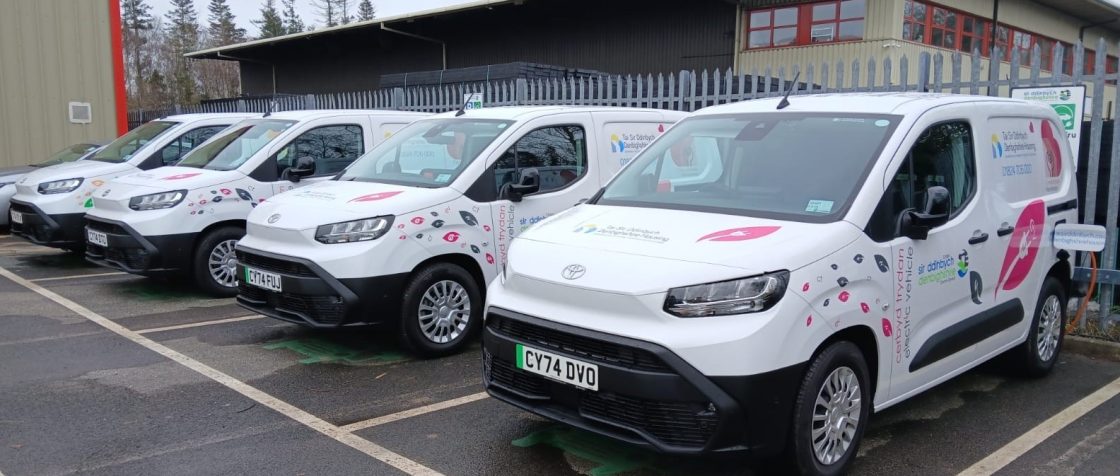
Denbighshire County Council is continuing its drive toward carbon neutrality with the rollout of electric vehicles to support its housing maintenance operations — a move that reflects growing momentum in the public sector to transition to cleaner, more cost-effective transport solutions.
Six electric Toyota Proace City vans have replaced end-of-life fossil fuel vehicles in the Council’s Housing Maintenance fleet, helping to reduce emissions, cut long-term operating costs, and improve sustainability across frontline services.
With a range of up to 200 miles, the new vans are well-suited to the demands of housing repair and upkeep across the county, offering zero tailpipe emissions and lower maintenance requirements compared to their diesel counterparts.
“The Council is working very hard to reduce our fleet’s carbon footprint by replacing end-of-life fossil fuel powered vehicles with greener alternatives where appropriate,” said Councillor Barry Mellor, Lead Member for Environment and Transport. “These vehicles will not only reduce emissions but also deliver long-term cost savings — a win-win for the environment and for taxpayers.”
The initiative forms part of Denbighshire’s wider sustainability strategy, which includes ambitious targets for reducing greenhouse gas emissions across council operations. Fleet electrification plays a central role in those efforts, particularly in service areas where daily mileage is significant, such as housing maintenance.
“With the amount of travel involved in maintaining housing stock, these EVs will make a meaningful contribution to our emissions reduction goals,” added Cllr Mellor.
As local authorities across the UK seek to align with net-zero targets, Denbighshire’s move underscores the practical steps being taken to embed sustainability into core service delivery — showing that environmentally responsible decisions can also bring financial and operational benefits.
The Council will continue to assess opportunities to transition further elements of its fleet to low-emission alternatives, guided by both environmental impact and service needs.