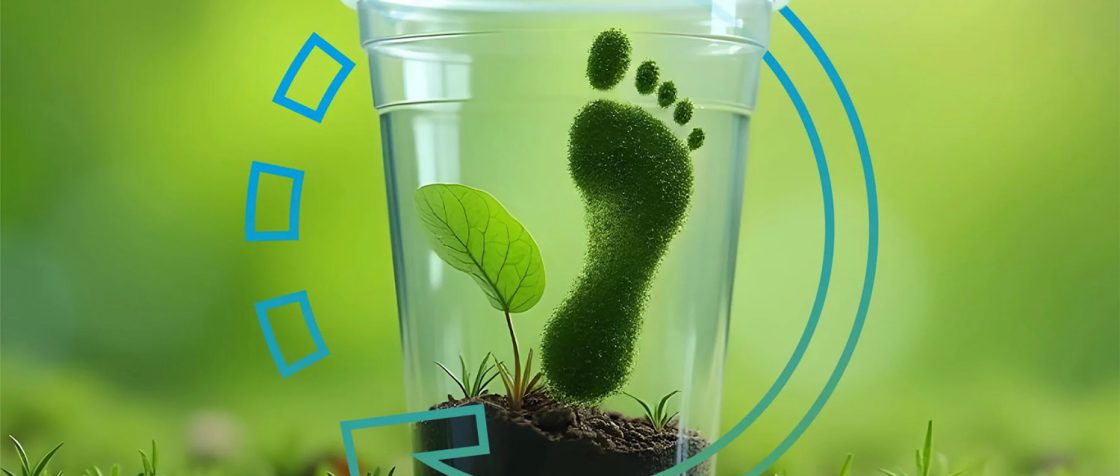
In today’s competitive market, where packaging must protect food and capture consumer attention, sustainability has emerged as a critical focus. Claims about environmental impact abound, but how can businesses verify them? Greiner Packaging UK & Ireland is posing the vital question: “How do you know the CO2e impact of your plastic packaging?”
This question extends to concerns about post-consumer waste content, compliance with the UK Plastic Packaging Tax, and EU food safety approval. Through cutting-edge innovation, third-party certifications, and a commitment to transparency, Greiner Packaging is setting the benchmark for sustainable packaging.
A Commitment to Sustainability and Innovation
“We firmly believe that sustainable economic success stems from innovation and ecological and social responsibility,” says Rachel Sheldon, Sustainability and Innovation Manager at Greiner Packaging. “Over the past few years, we’ve worked tirelessly, investing significantly to develop the most sustainable packaging solutions backed by credible third-party certifications for every claim we make.”
Measuring the Carbon Footprint
To address the growing need for transparency, Greiner Packaging now offers Sustainability Passports for most of its plastic packaging products. These passports calculate cradle-to-gate CO2e values and are validated by TÜV Austria, meeting the ISO 14067:2018 standard.
“By proving the carbon footprint of our products, we empower our customers to make informed decisions about their environmental impact,” adds Sheldon.
Certified Recycled Content
Greiner Packaging’s PET products are certified for their post-consumer waste content by the Sustainable Certifications Group (SCG), ensuring compliance with the Sustainably Sourced Certification Scheme.
“Greiner’s PET packaging, containing 30% or more recycled content, is exempt from the UK Plastic Packaging Tax,” explains Andy Whyle, SCG’s Sustainability Director. “Our certification provides verified proof, supports supply chain compliance, and highlights the carbon savings achieved through recycling.”
Meeting EU Food Safety Standards
Greiner Packaging’s commitment to innovation extends to food safety compliance. Its Dungannon, Northern Ireland facility became the first in the UK to receive European Food Safety Authority (EFSA) approval for recycling post-consumer PET into food-contact materials.
“We’ve also invested in cutting-edge flatbed technology to expand into the EU food-approved rPET tray market,” Sheldon notes, showcasing Greiner’s dedication to meeting evolving regulatory and market demands.
Industry Leadership and Circular Economy Goals
As members of RECOUP and founding members of the UK Plastics Pact, Greiner Packaging is deeply engaged in collective industry efforts to improve sustainability. Its K3® cardboard-plastic innovation, introduced in 2007, remains a cornerstone of its circular economy vision.
“Continuous investment in our UK manufacturing facility has enabled us to create pioneering solutions while maintaining a laser focus on environmental performance,” concludes Sheldon.
With initiatives like Sustainability Passports and certified post-consumer content, Greiner Packaging is not just asking the tough questions—it’s leading the way with solutions that prioritize transparency, compliance, and a sustainable future.
Source: https://newsbywire.com/greiner-packaging-asks-how-do-you-know-the-co2e-impact-of-your-plastic-packaging
Image provided by Greiner Packaging